

Placing a loved one in a memory care community is one of the hardest decisions a family can make. You want reassurance that the people caring for your loved one see them as more than a diagnosis—you want them to see the whole person. With so many memory care options available, comparing them can feel overwhelming.
One of the best ways to evaluate a memory care community is to look closely at its programming and overall philosophy of care. High-quality memory care goes far beyond keeping residents safe—it focuses on connection, purpose, dignity, and supporting the unique rhythms of each person.
As you tour memory care communities, consider asking deeper questions in the following areas to help you understand what daily life will look like for your loved one.
1. Family Collaboration: “How will we stay involved?”
Great memory care programs recognize that meaningful care cannot happen without families. They treat families as partners, not visitors.
Ask communities:
- How do you involve families in care planning and daily routines?
- Do you have regular family meetings, care conferences, or support groups on-site?
- How do you share updates—phone calls, emails, newsletters, apps, or in-person check-ins?
A strong care-partner collaboration begins on day one. In Progressive Care’s Meaning-Full Days program, the dedicated coordinator meets with families to complete a detailed life story, including personal history, interests, and hobbies. This information guides the care team in understanding each resident’s full story before care even begins. Tools such as “Get to Know Me” forms and personalized apartment signs help staff connect more deeply and also visually showcase each resident’s personality right at their door. Our care teams are trained to act as an extension of the licensed nurses, providing ongoing updates in addition to the more formal care conferences.
2. Staff Training & Expertise: “Who is caring for my loved one?”
Staff are the heart of memory care, and their training directly shapes resident well‑being.
Ask communities:
- What specific dementia training do caregivers receive? How often is it refreshed?
- Are staff trained in de-escalation, sensory changes, behavior communication, and trauma-informed care?
- Is there a dedicated dementia specialist, nurse, or program coordinator?
- What is the staffing ratio, and how long do team members typically stay?
High‑quality memory care programs invest in ongoing education that goes far beyond new‑hire orientation. In our Meaning‑Full Days program, the Coordinators lead the way by providing quarterly training sessions for our nursing and care team members, ensuring they stay current on dementia best practices and refreshed on the specialized skills needed to support residents. Each Meaning‑Full Days Coordinator is a Certified Dementia Practitioner and facilitates dementia care support groups within the community—offering families and local community members education, encouragement, and a space to connect.
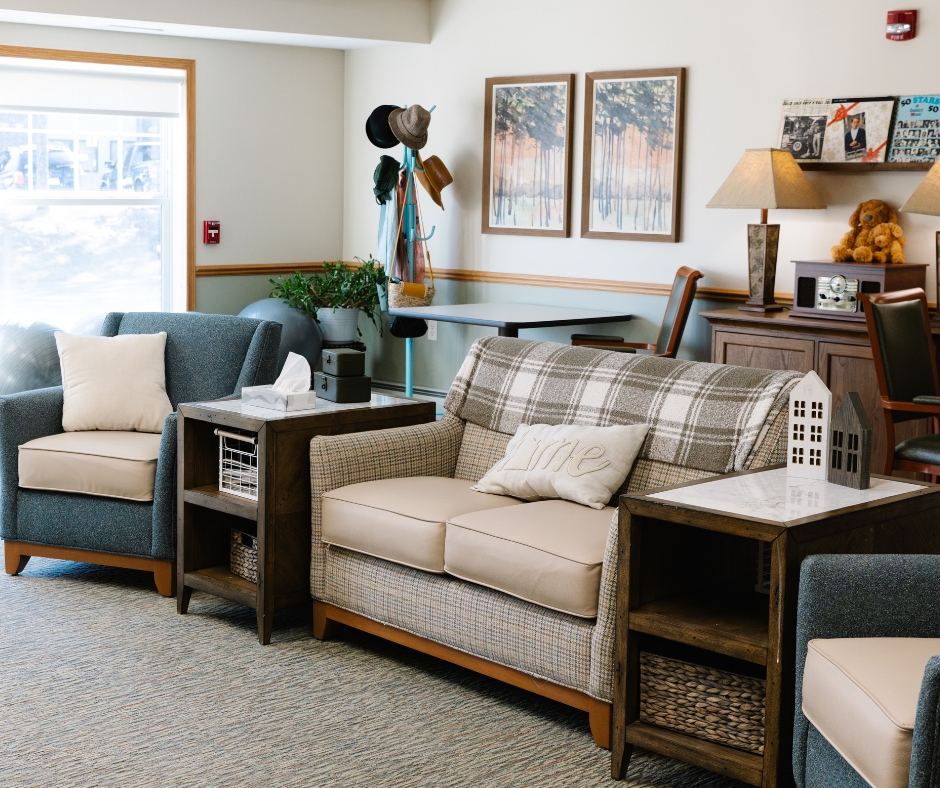
Peacefull & Enriching Environments
3. Environment & Safety: “Does the space feel supportive and calming?”
The physical environment plays a huge role in how safe and comfortable a person with dementia feels.
Look for:
- Clear, predictable layout with visual cues
- Ample natural lighting
- Comfortable, inviting common areas
- Safe outdoor spaces for walking and fresh air
- Reduced noise and clutter to minimize confusion
- Secure entrances/exits that still allow freedom of movement
A well‑designed memory care environment supports independence while reducing stress, agitation, and the risk of falls or elopement. In the Meaning‑Full Days program, we intentionally incorporate calming elements of sight, sound, and scent to help stabilize moods and create a soothing atmosphere. Therapeutic essential oils—such as rosemary, lavender, and peppermint—are diffused throughout our memory care neighborhoods, as these scents have been shown to support cognitive function and relaxation. Music is also used purposefully: not only to spark meaningful memories, but to set the tone for the day with calming or energizing playlists. In addition, interactive sensory stations and hands‑on features are available for residents to explore independently, offering comfort, stimulation, and moments of joy throughout their day.
4. Personal Routines: “Will my loved one’s preferences be honored?”
A hallmark of excellent memory care is recognizing that each resident has a history, personality, and daily rhythms that matter.
Ask communities:
- Do you tailor routines around the resident (sleep schedule, bathing preference, meal timing), or is the day structured to fit staff schedules?
- How do you gather personal history and life story information?
- Are residents encouraged to make choices throughout the day?
In our memory cares, “Get to Know Me” forms—capturing each resident’s likes, dislikes, and personal history assessments—serve as the foundation for building individualized service plans tailored to the unique needs of those living with memory loss.
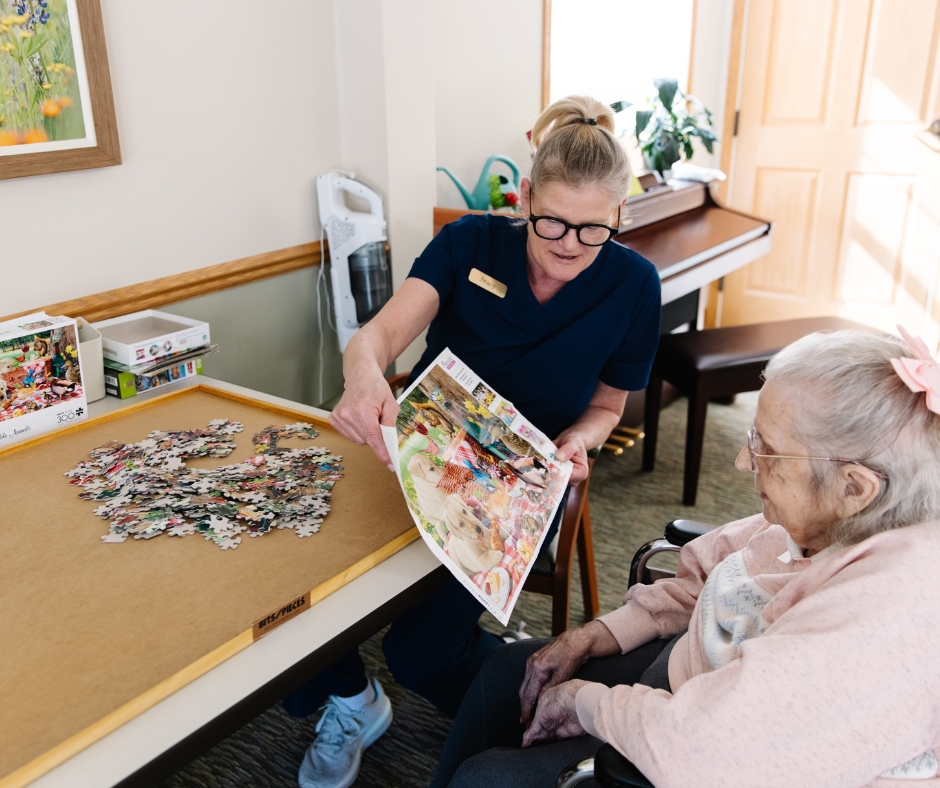
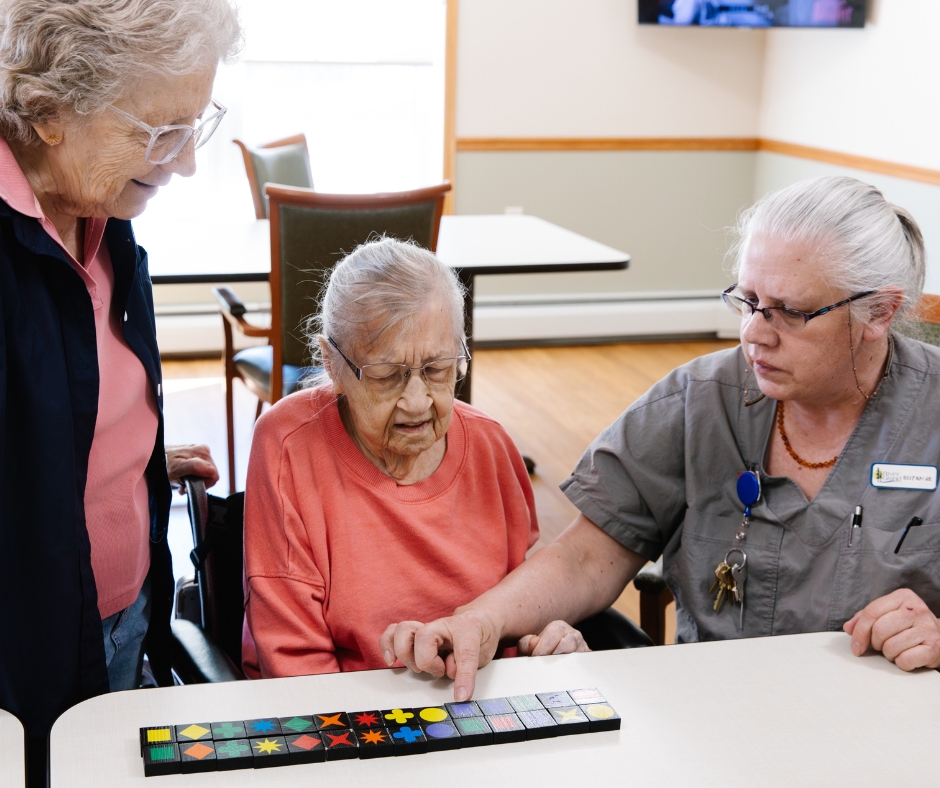
5. Meaningful Activities: “Is the programming purposeful and engaging?”
Activity programs should be about meaning, not just keeping residents busy. Quality memory care recognizes that meaningful engagement can slow cognitive decline, lift mood, reduce behaviors, and spark joy.
Ask communities:
- Do activities align with residents’ interests, strengths, and stages of dementia?
- Is there a mix of cognitive, physical, creative, and sensory programming?
- How do you structure 1:1 engagement for residents who do not join group activities?
Not everyone enjoys—or is able to participate in—group activities. That’s why our Meaning‑Full Days program takes an intentional approach to ensure each resident experiences at least one meaning-full moment social interaction per day that goes beyond routine care. This may happen through music, reminiscing, art, gentle movement, sensory stations, or even simple household tasks that provide purpose and connection.
6. Meals & Dining Experience: “Is the dining approach supportive?”
Mealtimes are about more than nutrition—they are moments of comfort, familiarity, and social connection.
Ask communities:
- Do the residents have options during meal times?
- How does staff support residents who need cues or assistance?
A supportive dining program helps maintain independence, dignity, and the enjoyment of food. In our memory care neighborhoods, visual menus are used to empower residents to make their own choices. Additionally visual menus, support independence while also stimulating appetite through clear, appealing cues. When a resident begins to need additional support during meals, we collaborate with occupational therapists to assess their needs. These specialists bring expertise in adaptive devices and dining strategies that can help residents maintain independence even as fine motor skills change.
Final Thoughts
Choosing a memory care community is both an emotional and practical decision. Asking thoughtful, detailed questions can help you gain a clearer picture of how your loved one will be supported day‑to‑day. Look for a community that not only prioritizes safety, but also enhances each resident’s sense of purpose, joy, connection, and overall quality of life.
To explore how these principles come to life, view Progressive Care’s list of memory care communities offering the Meaning‑Full Days program.
0 Comments